There's Something On Your MRI That Your Orthopedist Never Looked For. And It's The Real Reason Your Hip Is Still In Pain.
It's not bursitis. It's not your age. It's not just menopause. Researchers now know the pain starts somewhere else, in a part of your hip no one ever checks, and every treatment you've tried has completely ignored it.

You know the feeling by now.
It's 3 AM and you're awake again. You can't lie on the side that hurts. So you roll over, and now that same hip aches from the top, because your leg drops forward and pulls on it. You tried the pillow between your knees. At first it worked. Not anymore.
During the day it's sitting that gets you. Ten minutes in the car, at a restaurant, in a waiting room, and it feels like you're sitting on two hockey pucks. Then you stand up and the burn shoots down the outside of your thigh.
And walking. You were never a couch person: you walked every day, you gardened, maybe you did yoga or a dance class. Now even a walk around the block takes planning, and it ends with you counting the steps back to the car.
Stairs. Putting on your pants and your socks. Getting in and out of the car. Things you never used to think about now take a plan.
And when you try to explain it, you get a pat on the hand. Some days you start to wonder if it's all in your head. It isn't.
Maybe your doctor called it "just bursitis", or blamed your back, sent you for an X-ray that "looked fine", and gave you a shot. Maybe it worked for three or four weeks. Maybe you've seen two or three orthopedists by now, had three shots or ten, and the last one said the words so many women hear: "I don't know what else can be done. You'll have to learn to live with it."
Or maybe a physical therapist, an MRI, or a late night on Google finally gave it a name: "gluteal tendinopathy". And then came a sheet of clamshells and bridges that made it worse.
Either way, you're doing everything right. And nothing is working.
Here's what nobody has told you yet:
It's not because you're getting old, and it's not because you did something wrong. It's because every treatment you've tried is aimed at the wrong thing.
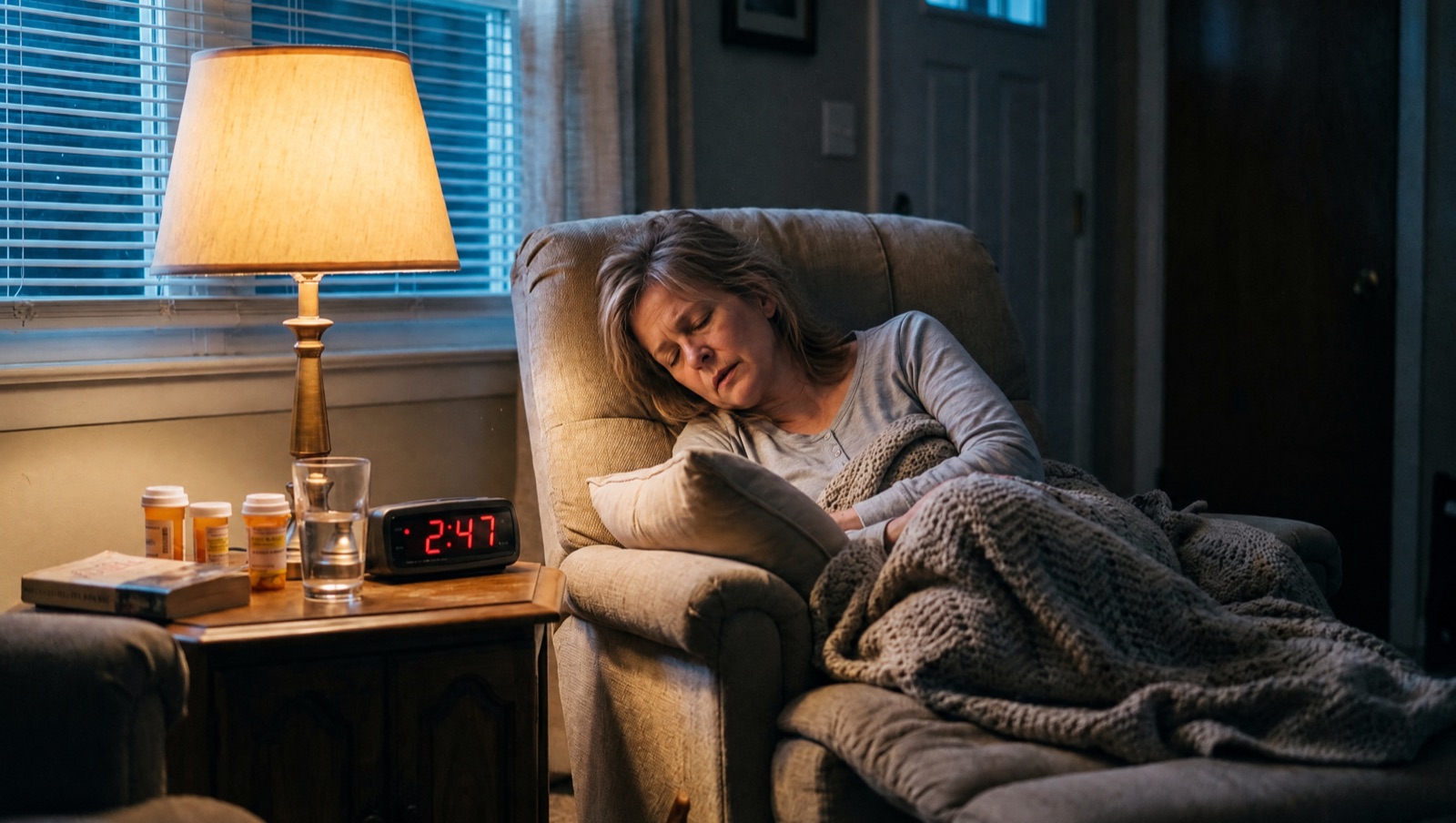
Sound Familiar?
A walk you used to enjoy now ends early, or doesn't happen at all
You can't sleep on the side that hurts, and turning over doesn't help for long
Sitting for more than a few minutes hurts, especially in the car or on a hard chair
The pain is on the outside of your hip, it burns, and it shoots down the side of your thigh
Stairs, standing up from a chair and putting on your socks have become a project
You've been told it's "bursitis", and the shots wear off faster every time
The exercises they gave you made it worse, not better
If even one of those hit home, keep reading.
Because what you're feeling has a specific cause. And it's one that almost no one ever explains to you in a fifteen-minute appointment.
Why Everything Has Failed You
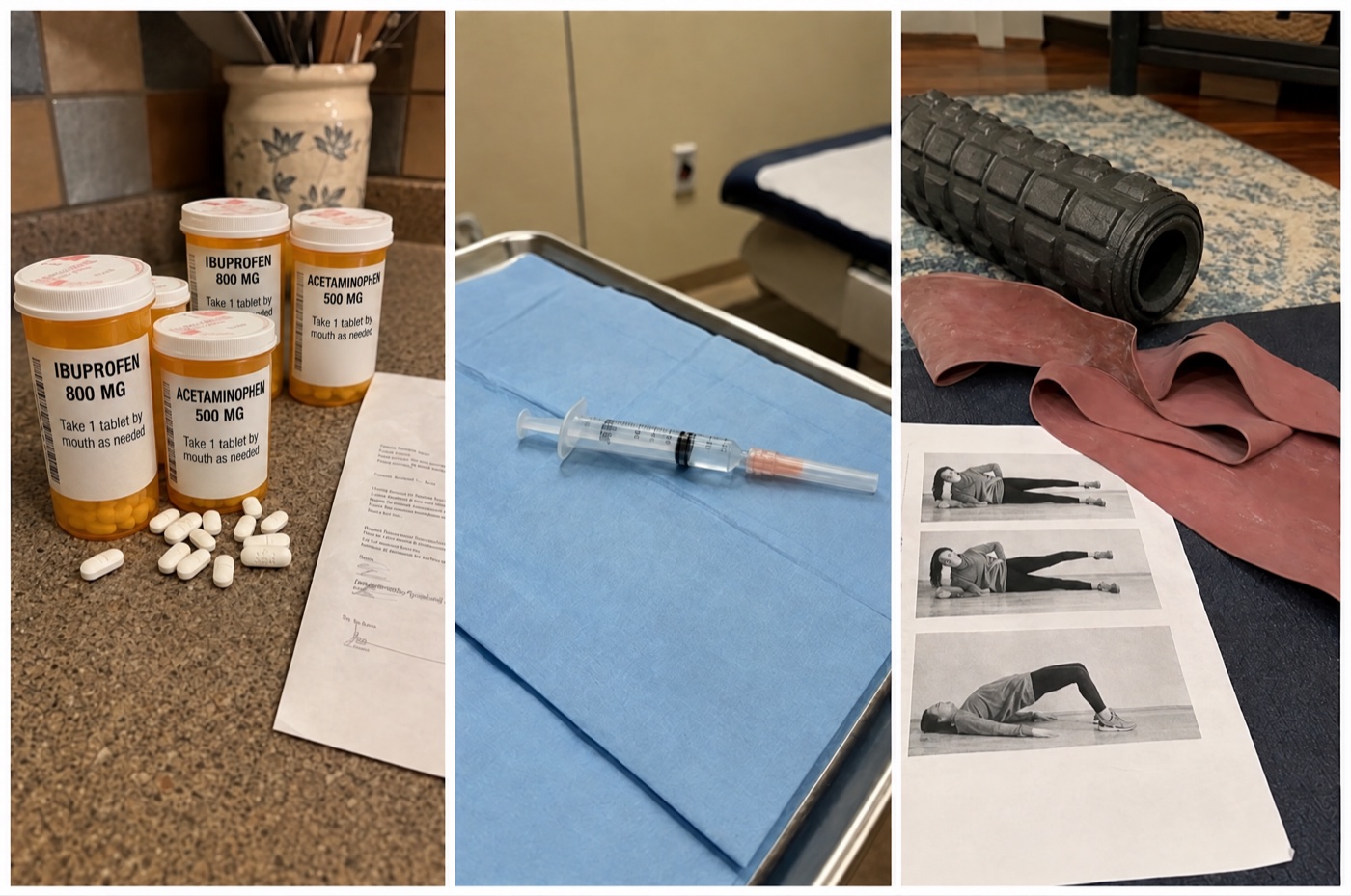
Let's be direct about what each treatment actually does, and why it keeps failing.
Cortisone shots calm the inflammation around the hip for a while. The first one buys you weeks. The next one, less. One woman on a patient forum put it simply: "they help but not long enough maybe 3-4 weeks." And after enough of them, many doctors start saying "no more shots", because repeated shots can harm the soft tissue around the tendon over time.
Pain pills, ibuprofen, Advil, Tylenol, take the edge off the burning. But the tendon keeps getting squeezed every time you stand, walk or lie on that side. And after 50, months of pills come with their own worries for your stomach and your kidneys.
Physical therapy and exercises are where so many women get hurt. Stretches that pull your leg across your body, crossing your legs, moves done lying on the sore side: positions like these squeeze the tendon against the bone. That's why so many women say the same thing: the exercises made it worse.
Menopause supplements, collagen and the "hormone balance" blends all over your feed, promise to fix your joints from the inside. Months of capsules, and the side of your hip still hurts. Whatever they do for your skin or your sleep, no capsule can make a weak muscle hold your pelvis level.
Red light therapy devices, the glowing wraps and wands, warm the skin and can take the edge off for a while. But light on the surface can't make the muscle on the side of your hip contract. The moment you take it off, the tendon is just as unprotected as before.
PRP and shockwave can cost thousands of dollars out of pocket, and for many women they do little or nothing.
TENS units, if you've tried one, buzz the nerves just under your skin to distract you from the pain. It tingles. But the moment you turn it off, you're right back where you started. As one woman wrote: "Everything is temporary."
Do you see the pattern? Every treatment goes after the inflammation, the pain signal, or the tendon itself.
Not one of them addresses the muscle that was supposed to be protecting that tendon.
The Hidden Reason The Side Of Your Hip Hurts
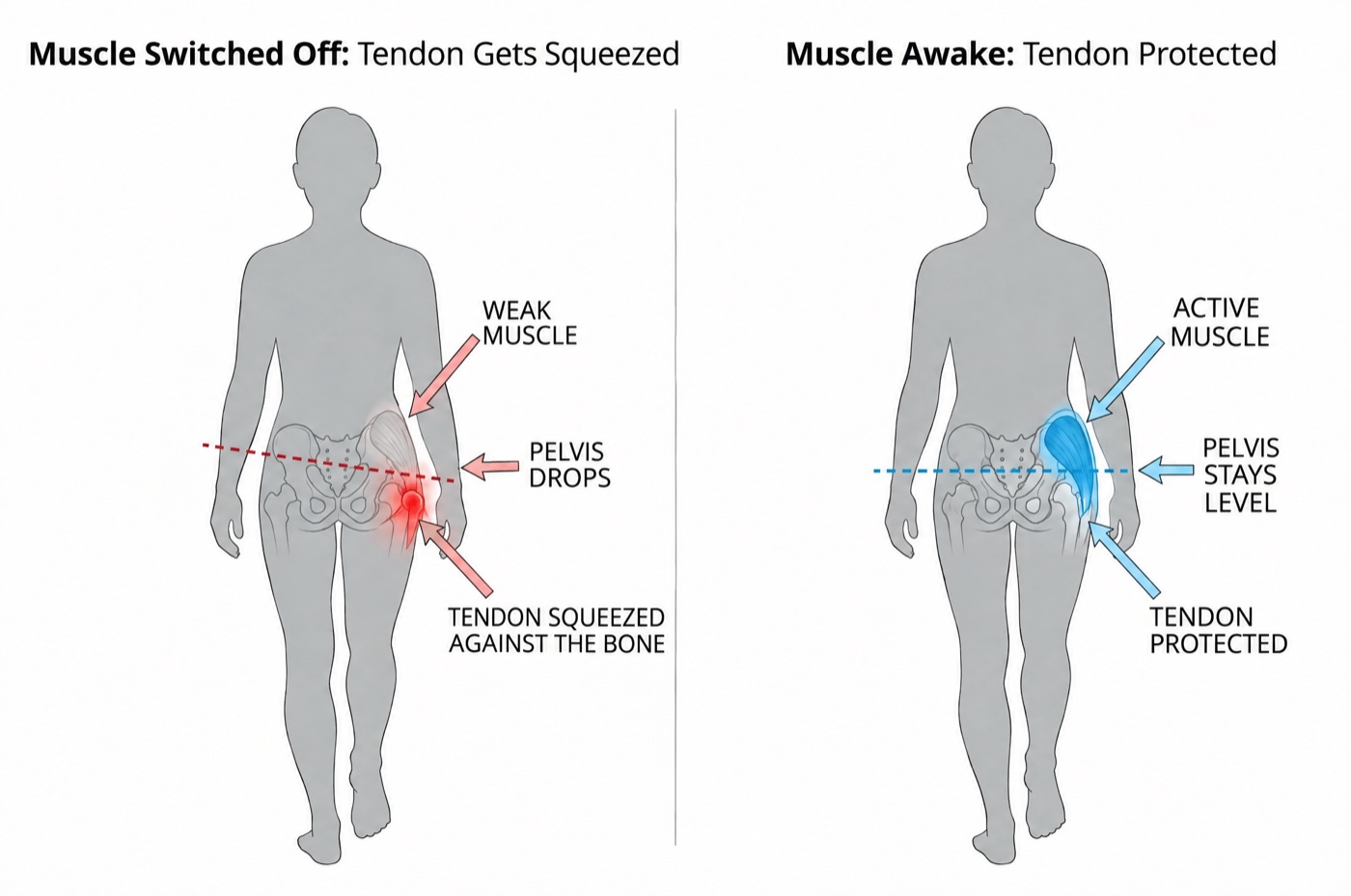
That sore spot on the side of your hip, the bony bump you can't lie on, is where two tendons attach: the tendons of your gluteus medius and gluteus minimus.
These muscles have one job. Every time you put your weight on one leg, when you walk, climb a step, stand up, they hold your pelvis level. When they're strong, the tendons sit comfortably over the bone.
But here's what happens to so many women in their 50s and 60s.
Yes, menopause plays a part, but not the way you've been told. Estrogen is one of the signals that keeps muscle strong, and as it drops, the first thing to lose strength isn't your tendon. It's the muscle that protects it. That's the match. But menopause alone isn't the problem: most women go through it without this pain, and many women on hormone therapy still have it. You can't undo menopause, and you don't need to. What turns a weaker hip into a painful one is what happens next.
The muscle on the side of your hip gets weaker. Quietly, with no pain at all. But a weaker muscle can't hold your pelvis level, so with every step it drops a little to the side. And every time it drops, the tendons get squeezed against the bone like a rope pulled over the edge of a table. At night, lying on your side, the same thing happens again. The tendon never gets a break.
That's when the pain starts. And when it does, your nervous system does something to protect you.
It makes that muscle work less and less.
Now the pelvis drops even more, and the tendon gets squeezed even harder.
You can feel it yourself. Notice when it hurts: lying on your side, crossing your legs, standing on one leg to step into your pants, sitting low in the car. Every one of those positions presses the tendon against the bone. A tendon that was simply "worn out" would hurt the same all day long. Yours hurts when it's being squeezed.
The more it hurts, the less the muscle works. The less the muscle works, the more the tendon gets squeezed. Round and round.
This is what researchers call a Core Muscle Lockout. Menopause lit the match. The lockout is the fire, and no hormone, capsule or cream can switch a muscle back on once your nervous system has locked it.
And this is why it gets called "bursitis" for years. The bursa next to the tendon gets irritated too, so the shot calms it for a few weeks. But the bursa was never the real problem. Nobody switched the muscle back on.
It doesn't show up on an X-ray. Your X-ray "looks fine". And that's exactly why so many orthopedists run out of answers: they look at bones and joints, and your bones and joints are fine. One woman was told by the fourth orthopedic specialist she saw that he couldn't help her, because her problem was "all soft tissue and not bones and joints."
She was right where the problem is. It's a muscle and tendon problem. And muscles and tendons are the work of rehabilitation medicine, the specialty almost nobody sends you to first.
The Muscle Nobody Told You About

It's called the gluteus medius.
You've probably heard the name only recently, from a physical therapist or from your own late-night searching. Most women find out on their own. As one woman wrote: "we have to be our own specialists."
It sits on the outside of your hip, right above the bone that hurts. It's your hip's internal brace. When it works, your pelvis stays level, your weight lands evenly, and the tendons stay protected.
When it goes quiet, the tendons take the load on their own. That's the burning on the side, the pain down the outside of the thigh, the ache deep in the buttock, and the nights you can't lie on that side.
Have you noticed? There's one piece of advice every physical therapist gives you, and almost every woman hears it sooner or later: strengthen your glutes.
There's a reason they all say it. It's those muscles that switched off, and when they let go, everything resting on them gave way: the tendon, your pelvis, your stride, your sleep. Women who manage to bring them back say it themselves:
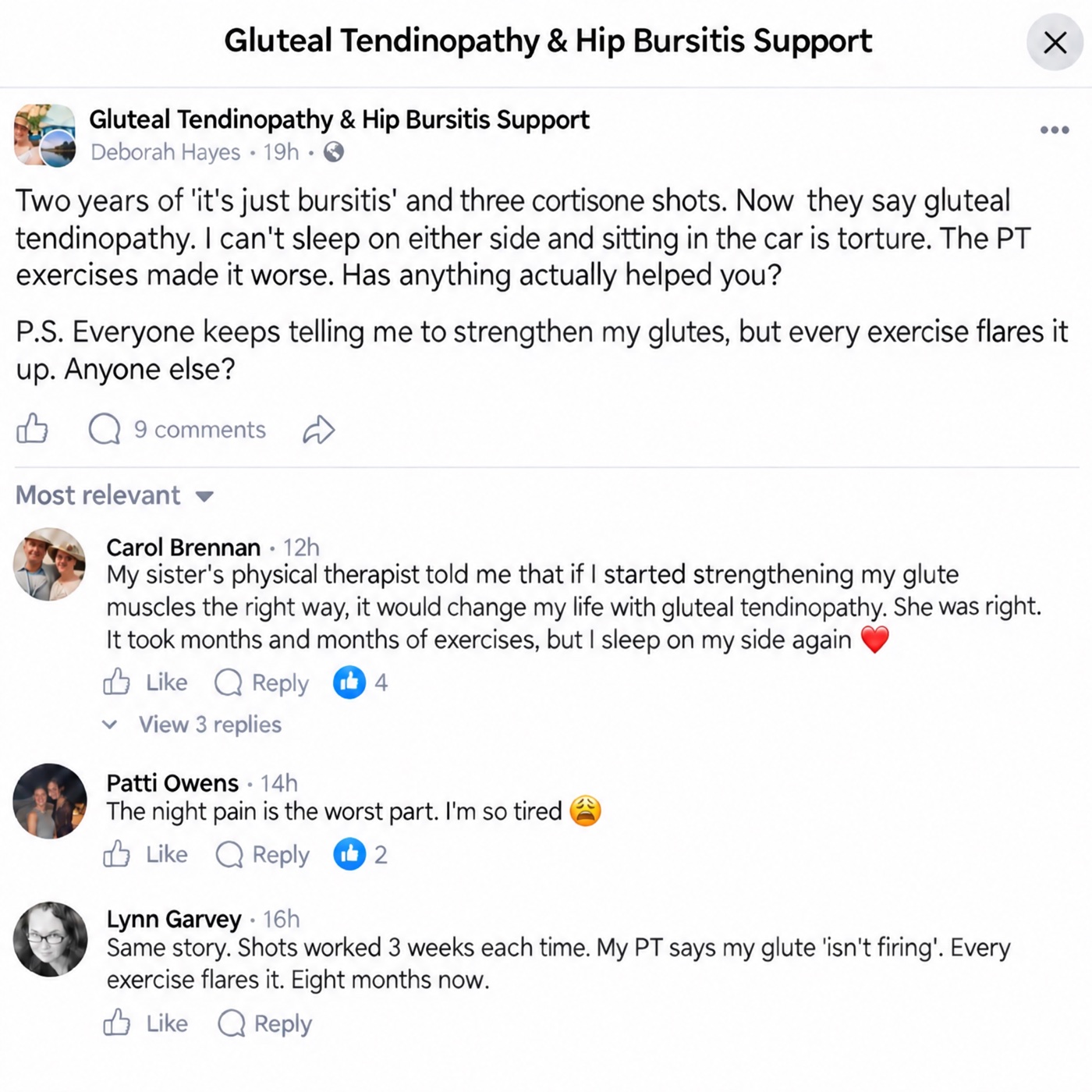
But look at what Deborah writes: every exercise flares it up. And even for Carol, it took months and months.
That's what a lockout looks like. The muscle can come back, but coaxing it with exercises is slow, and every rep squeezes the tendon you're trying to protect. A few women push through for months, like Carol. Most, like Deborah, flare up and quit.
"But the exercises were supposed to strengthen it, and they made it worse."
That's what so many women say, and they're right. The idea was correct: this muscle needs to get strong again. The method was wrong. Stretches that pull your leg across your body, crossing your legs and working the muscle in the wrong positions pull the tendon tighter against the bone while you're trying to strengthen it. You were strengthening it and squeezing it at the same time.
What your hip needed was a way to make that muscle work without squeezing the tendon.
That's why CoreReset goes on the side of your hip, right over the gluteus medius, and does its work while you're lying down or sitting still.
Now everything makes sense:
Why the cortisone only lasts weeks: It calms the irritation for a while. But the moment it wears off, the tendon is getting squeezed again with every step.
Why the exercises made it worse: They tried to strengthen the muscle by moving the leg in ways that press the tendon against the bone.
Why you can't sleep on that side: Lying on it squeezes the same tendon all night long.
Why "learn to live with it" is the worst advice of all: Every month you wait, the muscle gets weaker and the tendon takes more of the load.
Nobody switched your gluteus medius back on. Nobody gave it a way to work without hurting you.
But what if you could wake it up, without pills, without needles, without hormones, and without a single painful exercise?
The Breakthrough: Waking Up The Muscle That Protects Your Hip
For decades, rehabilitation clinics and sports medicine teams have used a technology called NMES, Neuromuscular Electrical Stimulation, to bring "switched off" muscles back.
The idea is simple: send gentle electrical impulses into the muscle so it contracts on its own. No weights, no stretching, no moving your leg. The muscle works, and the tendon isn't squeezed.
And it doesn't ask your brain for permission. Your nervous system can keep the lockout on as long as it likes: the impulse goes straight to the muscle and makes it contract anyway. Session after session, the muscle remembers how to work, and the lockout starts to lift.
But for years it lived in rehab clinics. And most of the "pain gadgets" sold for home use are TENS units, built to buzz the nerves, not to make a muscle work.
Until now.
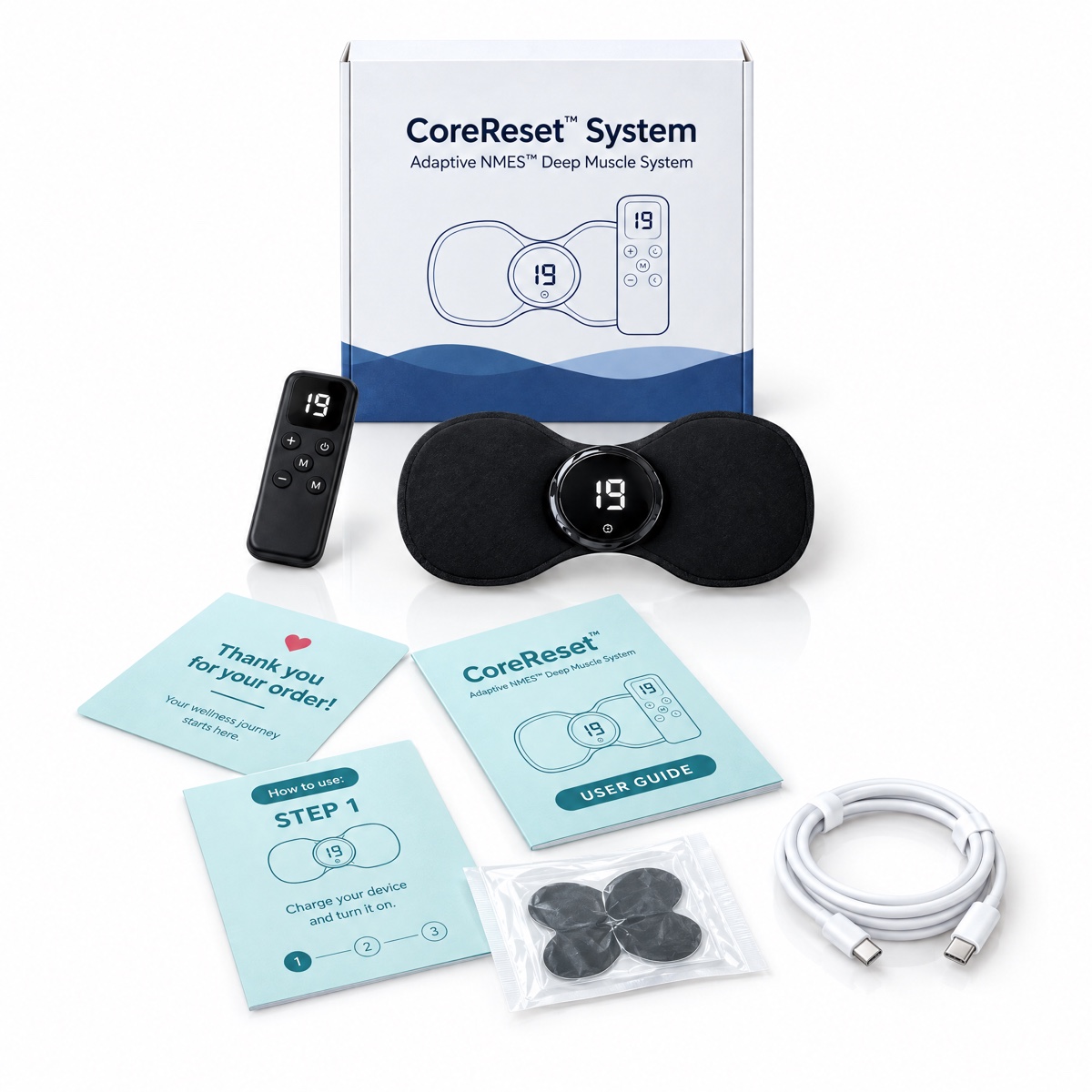
The CoreReset NMES Pro™ brings that technology home, with a butterfly pad shaped to sit right on the outside of your hip, over the gluteus medius.
CoreReset is not a TENS device. It's a Dual-Action NMES system.
Every 15-minute session works in two phases, again and again:
Phase 1, Contract: A deep, rhythmic pulse makes the muscle contract on its own, the way it should every time you take a step. Not a buzz on the skin, a pulse you feel inside the muscle.
Phase 2, Release: The next phase lets the muscle relax. Work, rest. Work, rest. The rhythm of a muscle doing its job again.
Session after session, the muscle gets stronger and starts showing up on its own again. Your pelvis stays level. The tendons get their protection back.
No hormones. Nothing to swallow. No more injections, and no paying thousands out of pocket for PRP. And no exercise that squeezes the tendon.
"I already tried a TENS. It only helped while it was on." That's what so many women tell us, and they're right about the TENS. A TENS covers up the pain signal for as long as it's running. CoreReset does something different: it makes the muscle work, session after session, so it gets stronger and starts protecting the tendon on its own, also when the device is off.
What To Expect: Your First Weeks
First 15 minutes: A deep, rhythmic pulsing on the outside of your hip, not painful, but a clear sensation that something is working deep in the muscle. You start at the lowest level and turn it up only when you're ready. If the area is very tender, you stay low. The device switches itself off at 15 minutes.
Week 1: One session a day becomes a habit, lying on the couch or in bed before you sleep. The muscle is learning to contract again.
Weeks 2 to 4: This is where sticking with it pays off. Fewer wake-ups at night. Standing up from a chair without that first sharp jolt. Sitting through dinner without shifting every two minutes.
Week 4+: The muscle is firing again. A walk in the park that doesn't end with you counting the steps back to the car. Turning onto your side at night and staying there. Keep up regular sessions to keep the muscle working.
Get 64% Off Today Only 👉


Why CoreReset Is Different From Everything You've Tried
Why the TENS unit can't reach it. A TENS unit works on the nerves a few millimeters under your skin. The muscle that holds your hip sits much deeper:
5 to 8mm deep
The muscle stays off.
30 to 50mm deep
Makes it work.
The deep stabilizers of your hip sit thirty to fifty millimeters below the skin. Surface stimulation stops at eight.
And compared with everything else you've tried:
| What you tried | What it works on | Why it didn't last |
|---|---|---|
| Cortisone shots | Inflammation around the hip | Wears off in weeks, and repeated shots can harm the tissue |
| Pain pills | The pain signal | The tendon keeps getting squeezed |
| Stretches & exercises | The muscle, by moving the leg | Some positions press the tendon against the bone |
| Menopause supplements | Hormones and joints, from the inside | No capsule makes the muscle work |
| Red light devices | The surface of the skin | The warmth fades, the muscle stays weak |
| PRP & shockwave | The tendon tissue | Expensive, and the weak muscle stays weak |
| TENS unit | Nerves under the skin | Relief only while it's on |
| CoreReset | The muscle that protects the tendon | Wakes it up without squeezing the tendon, 15 minutes a day |
Targets the muscle, not just the nerves. The butterfly pad sits right over the gluteus medius, on the side of your hip.
No squeezing the tendon. The muscle works while you lie or sit still: no stretching, no crossing your leg, no painful positions.
No hormones, no pills, no needles. Nothing to swallow, nothing to inject.
Made for real life, wireless remote with a big screen and big buttons, USB-C charging, no app. Put the pad on, press one button, lie back. 15 minutes and it switches itself off.
Proven technology, NMES has been used for decades in muscle rehabilitation and sports medicine. 6 programs, 20 levels, starting from the gentlest.
90-day money-back guarantee, long enough to give your muscle the weeks it needs. If you don't feel the difference, you get 100% of your money back, and you keep the device.
TODAY: Get 64% OFF the CoreReset NMES Pro
Stop Treating The Pain. Start Treating The Cause.
Before the next shot. Before another round of PT. Before you spend thousands on PRP.
You've done everything your doctors told you to do.
You've had the shots. Taken the pain pills. Done the clamshells. Tried the supplements and the red light. Maybe you even paid for PRP.
And you're still awake at 3 AM.
Not because your hip is beyond saving, and not because it's "just your age". But because nothing you tried gave the muscle on the side of your hip a way to work again without squeezing the tendon underneath it.
CoreReset is made to do exactly that.
TODAY: Get 64% OFF the CoreReset NMES Pro
Plus, with every order:
📦 Every order ships with tracking, so you always know where it is
🎁 1-year warranty on the device
🎁 US-based support, refunds processed within 48 hours
The 90-Day Promise: Use it for 90 days. If you don't feel the difference, send it back for a 100% refund, and keep the device. You have nothing to lose but the sleepless nights.
The Early Fall Sale price won't last, click below to check availability and claim your discount:
Get 64% Off Today Only 👉Important Information
CoreReset™ is offering a special deal to our readers! You can order it now with 64% off.
The Early Fall Sale is for a limited time. Click the button below to check availability and secure your discount.
Where can I get CoreReset™?
You can find it directly on the official website by clicking here.
PS: CoreReset™ is also protected by a 90-day money-back guarantee. Simply send an email and you'll get your money back, and you keep the device.




MARKETING DISCLOSURE: This website promotes certain products and services. The owner has a monetary connection to the products and services advertised on this site.
ADVERTISING DISCLOSURE: This website and the products referred to on this site are part of an advertising marketplace. This website is an advertisement and not a news publication. Persons appearing on this site may be compensated brand representatives or actors unless otherwise stated. Dr. Whitfield is a representative composite of the specialists consulted for this article.
HEALTH DISCLAIMER: This website is not intended to provide medical advice or to replace medical advice and treatment from your physician. CoreReset™ does not repair torn tendons and is not a substitute for medical care. If you have a complete tendon tear, talk to your doctor. Results come with consistent use and may vary from person to person. Do not use if you have a pacemaker, defibrillator or other implanted device, if you are pregnant, if you have epilepsy, or on broken or numb skin. If you have heart problems, recent surgery, or are under treatment for your hip, talk to your doctor first. The U.S. Food and Drug Administration has not evaluated the statements on this website.